

Longwood students use jazz, gospels in videos
Two years ago, Jordy Frias looked at the photograph of a black man being hanged. The photograph showed a group of white people surrounding the hanging man with grins on their faces. Frias included it with photos of civil rights demonstrations to make a music video of Sam Cooke’s song “A Change is Gonna Come.”
“Those pictures presented the facts about how it was for blacks,” said Frias. “They showed people protesting and standing up and trying to make a difference. It was important to show blacks being hosed down and being beaten.”
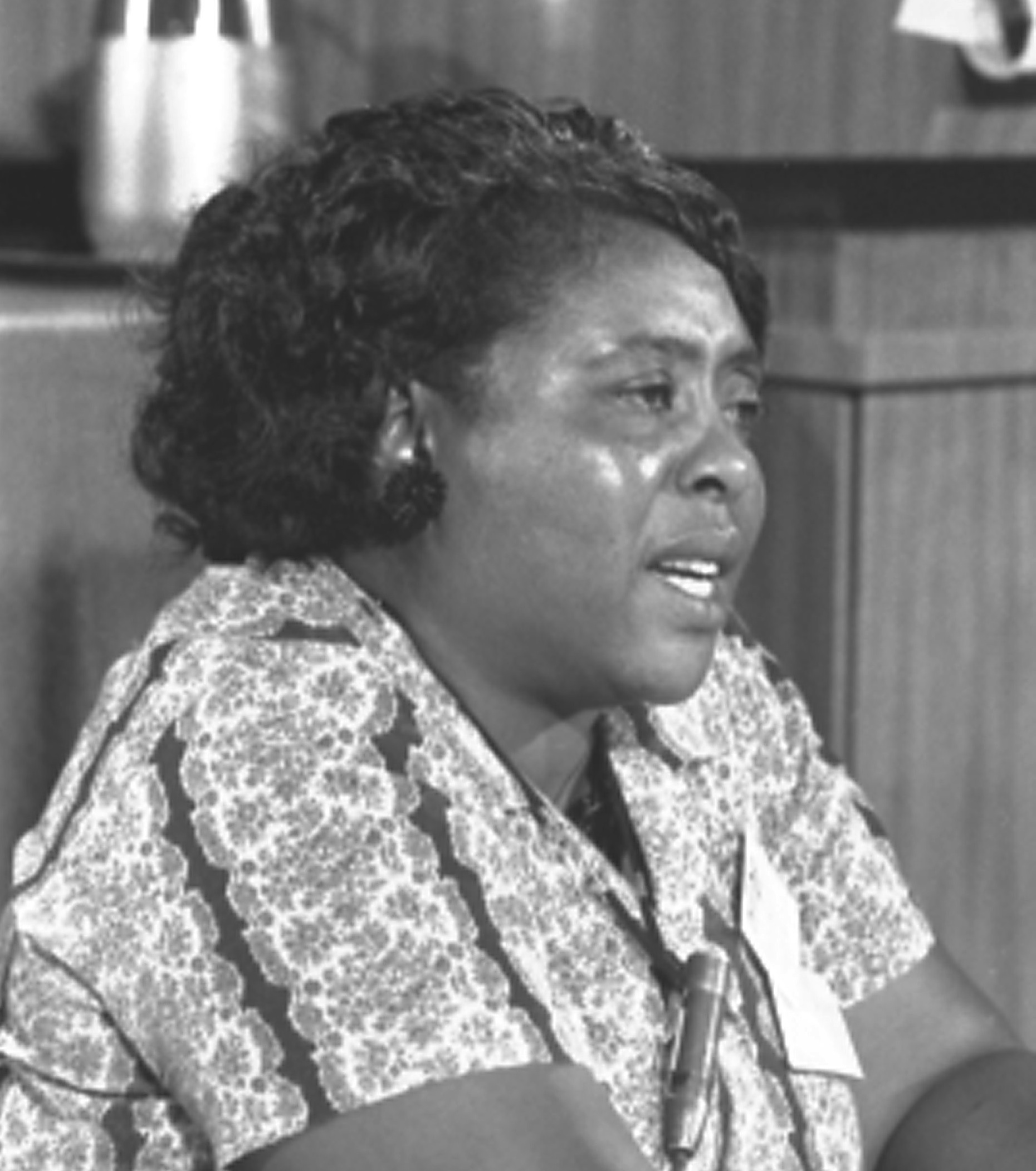
Frias’ video was one of 14 compiled in a film screened on Feb. 24 at the Black Music Heritage Center on Louis Niñé Boulevard to mark Black History Month. The videos were made by students at Longwood’s Fannie Lou Hamer Freedom High School, which is named after a civil rights hero. Hamer was an eloquent Mississippi sharecropper who endured deprivation and beatings to become a national spokesman for equal rights.
Elena Martinez, curator of the heritage center, said the theme of the celebration was the African-American experience and the activists who spoke out using their music. The jazz musician John Coltrane, Nina Simone, the Freedom Singers and others also used music to express their opinions during the civil rights era, and Fannie Lou Hamer herself had a rich voice that she used to sing hymns and civil rights anthems at demonstrations and in jail.
Pam Sporn, who taught the documentary class in which the film was made, attended the event along with about 40 visitors. Bronx vendors also sold food and crafts. The screening of Freedom Song started the celebration and was followed by storytelling and a jazz performance by Antoinette Montague.
Since their high school was named after a leader of the civil rights movement, Sporn decided to assign songs with social content from the 1960s and ‘70s. The students researched the lyrics, summarized their meaning and chose photographs to illustrate the songs.
The student film-makers found most of the photos they used in their school library. “The challenges at first were getting used to the program format and taking the time to go through the photos and picking what was relevant and significant,” said Frias, who called many of the photographs “disturbing.” Other pictures he used included photographs of Martin Luther King Jr., of demonstrations–including the “Children’s March” in Birmingham that was greeted by fire hoses and snarling police dogs–and black and white photos of lynchings.
Frias who took the class to develop computer skills, chose the Sam Cooke song, in a version performed by Seal, because it just happened to be on the computer he was using in the classroom. He liked the soulful lyrics and the singer’s smooth vocal ability, he said.
Another student chose “Mississippi Goddam” by Nina Simone, who wrote the song in response to the assassination of civil rights activist Medgar Evers. “The student had to learn who Nina Simone was and why Mississippi was one of the worst states for blacks at the time,” said Sporn.
Once they started, said Sporn, a former Hunts Point Express reporter who earned a Masters of Fine Arts Degree as a film-maker at Hunter College, the students didn’t want to put the books down. They stayed in school late to work on the project. One student in particular kept listening to the song he had chosen, she recalled, even after the film project was done.
“Fannie Lou Hamer was very important and spent her whole life waging war against poverty,” said Martinez, who pointed out that this year marked the 50th anniversary of Freedom Summer, the movement to attempt to register as many African-American voters as possible in Mississippi.
Frias, whose parents are from the Dominican Republic, is now an English major at John Jay College of Criminal Justice, and plans to become a teacher. Learning about the civil rights movement got him thinking about bondage, slavery, courage and freedom.
“It was race against race and people were pushed to the side. The activists and civil rights leaders were people that felt that it wasn’t something that we should accept. There are still leftover bits of prejudice that still remain, but I think the movement changed a lot of minds,” said Frias.