

Middle schoolers take a turn as activists
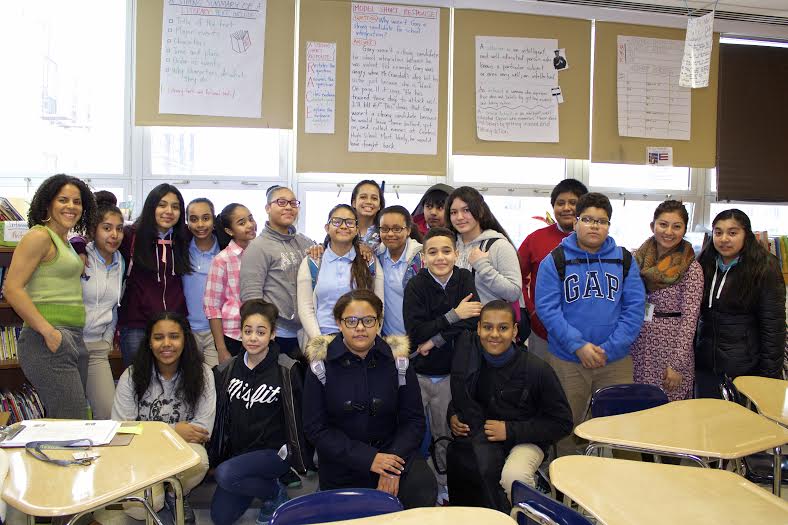
Seventh graders at the Bronx Studio School for Writers and Artists are trying to tackle some of the biggest issues facing them in their daily lives, by making presentations to teachers and neighborhood leaders whom they hope will help find solutions.
During a presentation on March 5, Stephanie Calleja and Kayla Torres spoke on safety after hours in Hunts Point and Longwood. Students’ main concern was that many of the street lamps were broken, either by acts of vandalism or lack of maintenance, and that after sundown, the streets were too dark to see. That statement prompted agreement from students with comments such as “Seriously!” and “You’ll get jumped” yelled out from the crowd. Torres explained that although she did not walk in the streets at night, members of her family did.
The presentations are part of an English project to get the children to speak out on what they believe are the neighborhood’s biggest problems, and offer ways to solve them. After reading a fictional story about a girl’s decision on whether to become an activist in Arkansas, in the 1950s, co-teachers Genevieve DeBose and Adriana Gonzalez assigned the seventh grade class to prepare power-point presentations in an attempt to become activists themselves.
Working in pairs, the students chose issues that they felt needed to be analyzed, and debunked myths and argued counterpoints that they might be faced with. To prepare, the students were given class time to interview experts who might help their research, with one group even enlisting the help of a police officer.
Fliers were distributed throughout the school, listing the issues that would be discussed and the presentation dates and times, and urging students and teachers to attend the presentations to support the student presenters, but also contribute to the discussion. Parents, business owners and all community members were also invited. Other topics included cleaning up the neighborhood, building more basketball courts, creating a vegetarian school lunch option, homelessness, gun violence, and creating more teen and young adult programs.
“It is awesome that they get to voice their concerns,” said Jazarai Sturdivant, an algebra teacher who said she saw one of the flyers and found the project interesting. “Some of these things they have even experienced themselves.”
Isamel Polanco, 13, chose to discuss the need for teen programs in the area. Her concern was that there are students with problems at home who choose to run away and live in the streets because they have nowhere to turn for help or to vent their frustrations. Polanco believes this will change if kids have sports or art clubs to join so that they are not idle.
“We don’t want to see kids doing bad things,” said Polanco. She said she has friends who just walk around the neighborhood after school to avoid going home, and that those behaviors could lead to trouble. She would like them to have better options.
While some students could see potential solutions to their problems, others said they felt powerless about making changes. Leslie Polanco, 12, chose to talk about gun violence in Hunts Point and Longwood, an issue she said is important for her and her peers.
“I can’t do anything about it, but I can talk to people who can,” said Polanco. She hopes that the right people will hear the class presentations and make change. However, Polanco’s teachers think the kids have more power than they realize. DeBose said she hopes that the project will show the students that they can be scholar activists who can make a difference. The project was meant to get them to analyze ongoing local issues, and create a plan of action to change them, she explained, adding she believes it will also help them gain empathy toward others going through similar troubles.
“These children can make a change,” said DeBose. “I want them to realize that they do have agency.”
As a class, the students have applied for a $2,500 grant from the Citizens Committee for New York City to beautify the neighborhood. The grant would allow them to buy trash cans and tree guards, and hold clean-up days for volunteers.
The students explained in their application that Hunts Point and Longwood currently have too much trash, and that they “deserve to live in a place that is beautiful and litter-free.” They hope to decrease the rat population by cleaning up the trash on the sidewalks and streets. They await a decision in April.